

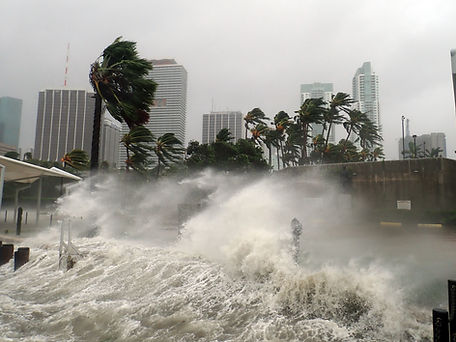
Disasters
A disaster is a serious disruption of the functioning of a community or society that causes widespread human, material, economic, or environmental losses exceeding the affected community's ability to cope using its own resources.
Flooding

Flooding is one of the most recurrent and severe natural hazards in Myanmar, occurring annually during the Southwest Monsoon season (typically from June to October). Low-lying delta regions, river basins, and coastal states are particularly vulnerable to extreme water inundation.
Earthquake
.jpeg)
On March 28, 2025, a major 7.7-magnitude earthquake struck central Myanmar at approximately 12:50 PM local time. Originating at a shallow depth of 10 km along the Sagaing Fault, the epicenter was located near the Sagaing–Mandalay border region, approximately 16 km northwest of Mandalay.
Landslides

A landslide is the downward movement of a mass of rock, soil, or debris along a sloped surface under the direct force of gravity. They occur when the structural stability of a slope fails, ranging from slow soil creeps to sudden, catastrophic rockfalls and mudflows.
Extreme Heat

El Niño serves as one of the primary drivers of extreme heatwaves, prolonged droughts, and record-setting global surface temperatures.
Global Weather Effects

Due to rising global temperatures, the earth's hydrological cycle is experiencing dramatic acceleration. Since warmer air can retain about 7% more moisture for each degree Celsius of warming, atmospheric conditions are driven to opposite extremes—triggering severe water shortages in certain regions while causing torrential downpours in others.
Fire Hazard

A fire hazard refers to any situation, material, activity, or condition that increases the likelihood of an uncontrolled fire occurring, or that inhibits rapid escape and emergency response when a fire breaks out.
